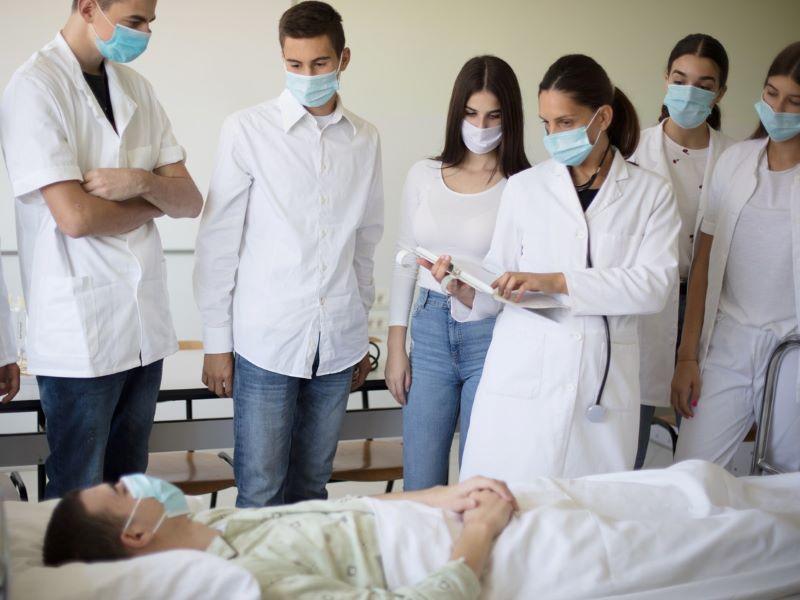
What foundations do students need to succeed in biosciences?

By Miranda Prynne , 24 November, 2022
Series Type
Collections
Teaser
In 2022, academics from across biosciences disciplines came together to discuss how to provide diverse first-year student cohorts with the grounding needed to successfully complete their studies. This collection of resources is based on lessons that emerged from the Heads of University Biosciences (HUBS) workshop where lecturers shared insight and advice on best teaching strategies and content.
Description
In 2022, academics from across biosciences disciplines came together to discuss how to provide diverse first-year student cohorts with the grounding needed to successfully complete their studies. At the Heads of University Biosciences (HUBS) workshop hosted by the University of East Anglia, lecturers from across the UK met to share insight and advice on best teaching strategies and content. This collection of resources is based on the lessons that emerged from the discussions on “Fundamental Biosciences: What foundations do students need for success?”.
Resource

By Miranda Prynne , 15 August, 2022
Threshold concepts are themes that underpin an academic discipline and can provide a framework for students to build knowledge. But teachers must be mindful of students’ capacity to understand them, as Becky Lewis explains
Reading time
4minutes
By Miranda Prynne , 22 August, 2022
Should educators help students understand their chosen subjects within a broader context of learning? Mark Coleman has been experimenting with this in his biology course and shares his findings so far
Reading time
5minutes
By Miranda Prynne , 7 June, 2022
Lots of new terminology can leave students feeling overwhelmed. Sonja Dunbar shares one way to build student confidence when encountering discipline-specific terms
Reading time
3minutes
By Miranda Prynne , 7 July, 2022
Traditional teaching in data analysis focuses on statistics and visualisation but an emphasis on foundational data and computational skills is needed to prepare students to work with real data, explains Philip Leftwich
Reading time
3minutes